The final two sins of omission are going to run long compared to the typical entries, as we are going over what I consider two monumental achievements in the history of rock music, one from each side of the Atlantic. To begin, let’s head over to the UK, where Nirvana’s rise and the explosion of Grunge have caused resentment throughout the British Indie scene. After months of scrambling for help, an androgynous man posed for a Select magazine issue reading “Yanks Go Home!” And finally, the tides would begin to turn.
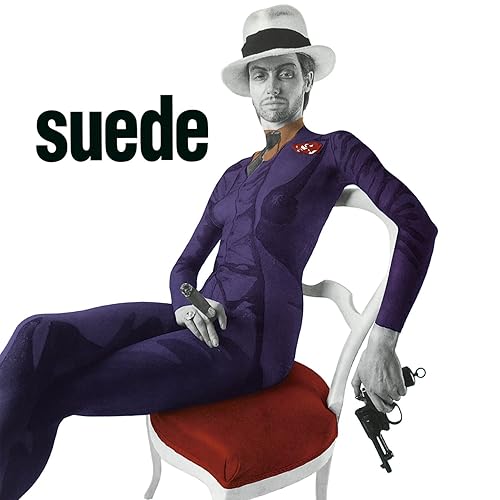
“The Drowners” – Suede
UK
#49 peak (May 23, 1992), 2 weeks on chart
No one was ready for this song. In a world where grunge had just exploded, shoegazing was hanging on, and Madchester, New Wave, and Hair Metal were dying, there was no way anyone could have been ready for a glam-influenced rock band, fronted by a long-haired androgynous young man who claimed to be “a bisexual who’s never had a homosexual experience,” with a sound that clearly took more inspiration from David Bowie than Van Halen. But in May 1992, it happened. “The Drowners” was released and was played in full on The Chart Show. While Suede would go on to release actual hit records and would eventually be surpassed in popularity by Blur and then Oasis, “The Drowners” is the song that started it all. If “Wonderwall” was Britpop’s “Smells Like Teen Spirit,” this is its “Man In The Box.”
For a genre that has since received criticism for being a deliberate detour from the forward-thinking trends of the past, it’s quite a repudiation that this song sounds like such a complete rejection of everything that preceded it. Instead of the bloated, classically-trained guitar work of glam metal, “The Drowners” is a song that constantly sounds like it’s building up to something… only for you to complete its four minute run time and realize it was just steadily maintaining its momentum the whole time. Not to mention the meaning of the song. Hair Metal gave us such lovely and romantic songs like “F**k Like A Beast,” “Seventeen,” and “Cherry Pie,” songs where the objective is simple: hard, punishing sex. Axl Rose and Sammy Hagar were never going to write about being submissive and dominated in bed, and they especially weren’t going to write a song that’s probably about gay sex. Frontman Brett Anderson has said, “I’m quite interested in lying back and taking it. And that’s traditionally a female thing, isn’t it? It’s about emotional submission as well. Relinquishing control isn’t considered very manly.”
So slow down, slow down
You’re taking me over
And so we drown, Sir, we drown
Stop taking me over
Not only is this song written in a way that took the tired, exhausted themes of eighties sex songs to a new level that hadn’t been explored before, it continued the American trend of irony in songs. As much as Brits sang about happy subjects in “Live Forever” and “Alright,” they also spewed vitriol under stunning melodies and instrumentation in “Common People,” a song about the spoiled brats of the British class system, and “Inbetweener,” a peppy song about a pathetic couple who study fashion and art. Suede were the first, and probably darkest step to this trend in Britpop, as they would later dive deeper in their first big hit “Animal Nitrate,” and especially on their magnum opus Dog Man Star, the least Britpop-sounding Britpop record of all time.

Second up in its deconstruction of the musical establishment is its instrumentation. At the time, Britain’s closest attempt at an answer to grunge was shoegazing, a genre with little commercial potential due to its vocals being effectively buried under its instrumentation. But not here. In “The Drowners,” the androgynous Anderson is front and center. His vocals just pelt you with his sudden shifts from his deep chest voice to his falsetto, taking canyon-esque dives back into the verses. Not to mention all the instruments are clear and well-defined, an aspect shoegazing clearly didn’t have time for.
But of course, Britpop was all about a full-on assault on grunge. And with the exception of both genres being part of 90’s alternative rock, nothing about grunge fits with “The Drowners.” Of course, Anderson’s androgynous presence and falsetto vocals were never going to fit in with Kurt Cobain’s untrained, ragged vocals or Eddie Vedder’s oft-parodied deep voice. But I think the main part of the song’s great split from grunge is Bernard Butler’s guitar. Butler was one of the greatest guitarists of his generation, and it all comes from his unique style of play. Not unlike later American bands Weezer and The Smashing Pumpkins, Butler went with Eb tuning on his songs. But he went at guitar differently than Rivers Cuomo, and he clearly wasn’t going to downtune his guitar to Drop C# and play a bunch of open C# chords. Butler hated when guitar players simply played standard chords, and often improvised by weaving in and out of chords in his songs. His guitar playing isn’t as allergic to chords as it would be on later hits “Animal Nitrate” and “We Are The Pigs,” but it does find ways to play with the standard A-D-C-E-D chord progression by bending the final recitation of the D chord, and arpeggiating the reprised E chord before the chorus hits. And then we get to his solo, which just effortlessly switches from the distortion that would become so characteristic of the nineties to Mick Ronson-esque glam. While the eighties hair metal bands were recycling each other’s ideas, Butler went straight for the source.
It may have not been a hit, but “The Drowners” was one of the most important songs of the entire decade. Anderson, Butler, and their band of misfits rewrote the book of music history to ensure that later bands would be able to etch their name in the books two years later. While not the most overtly Britpop band, their British sound would eventually mutate into the strictly British subject matter Damon Albarn and Jarvis Cocker would mine through for the next five years, while the blueprint would shift from David Bowie to the more accessible guitar riffs of T.Rex and The Jam for future reference. If I had no rules regarding chart success, this song would have been in the top 5 of my best list.
UP NEXT: But as for what would have topped the list…
SOURCES
“Suede.” Unmask Us 2015. Web. 21 August 2022 https://unmask.us/songwriters-q-s/suede/.
“Bernard Butler – How To Play Animal Nitrate.” BBC. Posted by Evgeniya Evgeniya to YouTube, 2 February 2011. Web. 21 August 2022 https://www.youtube.com/watch?v=hexMs1VuwMY.
Chords verified with Ultimate Guitar: https://tabs.ultimate-guitar.com/tab/suede/drowners-chords-2559495.
IMAGE SOURCES
Single cover from Amazon
Photo of Suede from Past Daily


Leave a comment