And now to provide justice to the fact that “Smells Like Teen Spirit” wasn’t allowed to be on this list and how “Lithium” wasn’t eligible for this countdown, let’s just stop delaying the inevitable and get on with it…
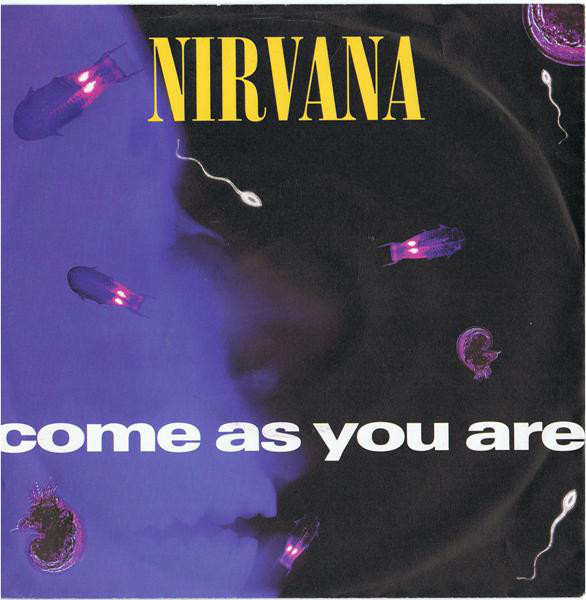
“Come As You Are” – Nirvana
Pop
#32 peak (May 2-9, 1992), 18 weeks on chart
Modern Rock
#3 peak (February 15, 1992)
#4 year-end, 18 weeks on chart
Mainstream Rock
#3 peak (April 14-28, 1992, May 9, 1992)
#5 year-end, 25 weeks on chart
UK
#9 peak (March 14, 1992)
#86 year-end, 5 weeks on chart
What a surprise. Nirvana made the best list after all. From 1991 to 1994, you can just guarantee these guys a spot on the best list. We’ll see about 2002 of 2003, when “You Know You’re Right” became their final hit song eight years after Kurt Cobain’s death. I don’t think I’m giving any new information when I say that Nirvana is one of the greatest musical acts ever. As one of the few bands where I’ve listened to their entire studio discography, I can attest that every song they released on those albums is good in some way. Even their b-sides on Incesticide were songs that other bands would have been jumping up and down to have. The reason is simple: with his songs paying equal influence from The Sex Pistols and The Beatles, Kurt Cobain redefined what rock music could be. Other grunge acts made it before Nirvana, but Nirvana is the band that made it accessible to a whole new audience. And “Come As You Are” is further proof of Cobain’s songwriting genius.
Full-on confession: Although I generally rank by best lists based on which song I would most want to hear a second time, had I done the rankings exclusively like this “Come As You Are” would have been at number two. But because of one crucial element, I had to knock this song down several slots. Why? It’s simple. The main riff of the song is plagiarized.
The opening riff to “Come As You Are” uses the same four notes, as well as the same two backing chords, as the main riff to “Eighties” by the British indie band Killing Joke. And while some riffs can just be written off as similar but not the same (such as later in the decade, when “Self Esteem” by The Offspring and “Little Things” by Bush came out at the same time with similar, but not identical, chord progressions), you can’t really ignore the similarity between “Come As You Are” and “Eighties.” Both songs are in D tuning, both songs use the same ringing pattern on the second string with the same notes (G on the first measure, and A on the second), and both songs use the same Em-D chord progression in the intro. I tried to think of ways to say the songs are not one and the same, but after going through both riffs, they are. Killing Joke noted the similarities between the two riffs and depending on who you ask, either filed a lawsuit that was thrown out of court after Cobain’s death or did not file a copyright infringement lawsuit. Apparently times have changed, since there is far more in common between “Come As You Are” and “Eighties” than there is between “Uptown Funk” and “Oops Up Side Your Head.” But the real question: Does “Come As You Are” have enough elements that allow the song to stand on its own two legs? My answer is yes.
The “Eighties” riff is trebly, with lots of bombast in its execution. It comes across like a band ready to march the streets, which is fitting considering that the song appears to partially be a protest to conservative government in both America and Britain. But the “Come As You Are” riff is very bass-like, with much less treble going on. It has been said time and again, but the chorus pedal used on “Come As You Are” makes the riff sound as if it is being played underwater. It is such a unique effect, that has been attempted since but not with the same impact. Then there is the fact that the rest of the song follows different chords than “Eighties,” using an ascending two-chord A5-C5 pattern rather than the descending pattern used in “Eighties.” And, of course, there’s the fact that both songs are for different audiences and represent different eras. With its bombastic treble-heavy production, gang vocals, and emphatic voice, “Eighties” just screams… well… the eighties. On the other hand, “Come As You Are” comes coated in nuclear-powered guitars and Cobain’s strained vocals, all coming together in the trademark quiet verse-loud chorus formula that Nirvana stole from the Pixies. “Eighties” may be pure eighties, but “Come As You Are” is pure nineties.
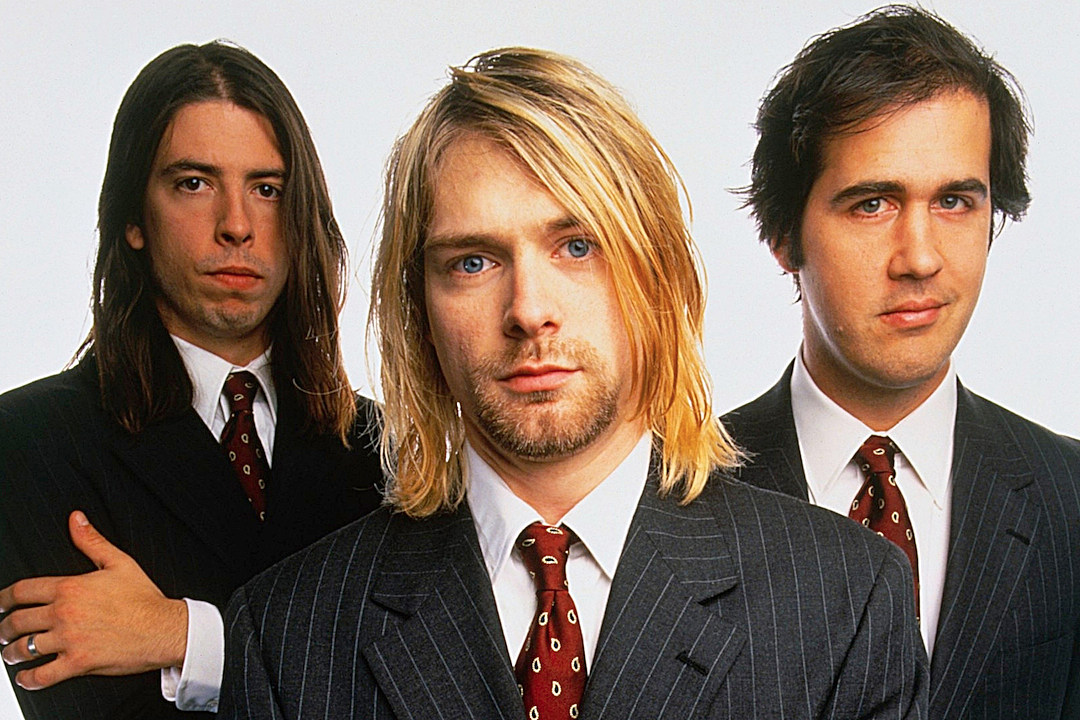
Kurt Cobain wrote “Come As You Are” as a criticism of how people are expected to act, and claimed that the lyrics were intended to be “contradictory.” There are contradictions, most notably with the first verse:
Take your time, hurry up
Come doused in mud, soaked in bleach
As I want you to be
But more than anything, it comes across as a criticism and as Cobain’s take on the punk opinion of society: Society had become boring and people had fallen into unquestioned leadership. There is the possibility that like “Eighties” before it, the expectations could be a criticism of conservative government, which was still in effect with Nevermind coming out during the George H.W. Bush Administration and Britain under post-Thatcher governments. But I think it’s just an apolitical song about broken leadership regimes in general. The whole “as I want you to be” comes after contradictions, which makes the narrator of the song sound less likable and more as a “do as I say, not as I do” type. Oh, I’ve got no use for people like that. Anyway. Allmusic has stated that the “I don’t have a gun” chorus is a reference to Cobain discussing the world in general, rather than a specific target. Which is honestly a belief I agree with, as I previously stated with the song’s lack of specificity. But therein lies the question: if this song is about disobeying orders and lacking trust in leadership, what is the point of the “memoria” line? I mean, “memoria” is not a word. But then again, it’s Nirvana. Nirvana got away with a song where Cobain just sang about not having recess. Nirvana’s next single after “Lithium” claimed that “nature is a whore.” Sure, Kurt. Nature sleeps with other people when it’s bored. But it comes across to the point that Nirvana could make any stupid phrase sound like the most profound, universal thing. When Kurt sings “Memoria,” it just makes sense since I’m so used to it, but also because I can’t think of a better way to represent the pre-chorus. Just repeating the song’s title? Wouldn’t work. It would be too repetitive. Write a proper pre-chorus to fit the existing melody? Wouldn’t be as catchy. “Memoria” just works. Heck, the strategy worked so well that drummer Dave Grohl would do the same thing on Foo Fighers’s “Wind Up” six years later by building a bridge around a made-up word called “paranamia.” Go with what works, I guess…
And it’s all brought together by Butch Vig’s production, which just emphasized the commercial aspects of grunge in the best way possible. Vig forced Cobain to double track his vocals, a strategy Cobain hated since it wasn’t punk, but which worked because it just further emphasized Cobain’s endless supply of perfect melodies along with portraying Cobain’s vocals with a ghostly, otherworldly effect. Everything in the song stands out: Cobain’s mocking guitar solo, Grohl’s cymbal bashing in the chorus, and of course, Cobain’s opening riff. “Come As You Are” may not be “Smells Like Teen Spirit,” but it still maintained the thesis of who Nirvana were. They were a band that thrived on anti-establishment messages, iconic riffs that proved they knew more about making the guitar stand out than the critics who based their music as “anti-solos” believed, and melodies you wouldn’t realize were embarrassing to sing until it was too late. With all that said, does it even matter that they stole the song’s opening riff?
UP NEXT: The most successful rock band of the year with one of their most legendary songs at #3.
SOURCES
Borzillo-Vrenna, Carrie. “Nirvana Pay Back Killing Joke.” Rolling Stone 10 April 2003. Web. 28 August 2022 https://web.archive.org/web/20070109142238/http://www.rollingstone.com/news/story/5936629/nirvana_pay_back_killing_joke.
Humphrey, Clark. “Kurt Cobain: Seven Years Later – A Reflection By Clark Humphrey.” History Link.org 10 May 2001. Web. 28 August 2022 https://www.historylink.org/File/3263.
“Conspiracy Of Two.” Kerrang! 12 April 2003. Web. 28 August 2022. Information gathered from Wikipedia: https://en.wikipedia.org/wiki/Eighties_(song).
Berkenstadt, Jim, and Charles R. Cross. Classic Rock Albums: Nevermind. Schirmer, 1998. Print. Pg. 71. 28 August 2022. Information gathered from Wikipedia: https://en.wikipedia.org/wiki/Come_as_You_Are_(Nirvana_song)
Deming, Mark. “Come As You Are – Nirvana.” AllMusic 2022. Web. 28 August 2022 https://www.allmusic.com/song/come-as-you-are-mt0003646196
Chords taken from Musicnotes: https://www.musicnotes.com/sheetmusic/mtd.asp?ppn=MN0067113.
IMAGE SOURCES
Single cover from Nasdisc
Photo of Nirvana from Loudwire


Leave a Reply