You know what’s kinda cool? When a bad band or artist makes something truly great.
As irritating it can be when we keep rewarding success to musical acts that constantly fail to provide us with good songs, it can just make it that much more satisfying when they actually get it right. Just to name an example, the Black Eyed Peas may have brought us horrendous song after horrendous song throughout the 2000s, but they also gave us “Where Is The Love?” To stay on topic with the seventies, Ted Nugent became better known for his outrageous political views and his constant sexual escapades than for his music, but he will always have “Stranglehold.” I mean, think about it. Wouldn’t it be great if one day AJR decided to stop making terrible songs like “No Grass Today” or “100 Bad Days,” and suddenly came out with a breathtaking pop masterpiece? And then there’s Lionel Richie.
Lionel Richie, the former frontman for the Commodores, has become a walking punchline for his consistently bland and boring discography, especially regarding his hits in the eighties. “Truly” is shockingly obnoxious with its melodramatic string section, “Dancing On The Ceiling” is a song intended to make people dance that is actually incredibly boring, and much of his other hits follow suit with the latter. I don’t hate Richie as much as most critics, but his songs consistently fail to provide me a reason with why I should become a fan.
And yet, Richie started off his career as a fairly respectable artist with the Commodores, a funk/R&B band from Alabama. After breaking through into the mainstream with “Sweet Love” the previous year, the band scored eight top 5 hits and ten top 10 hits, including two number ones in the seventies: 1978’s “Three Times A Lady” and 1979’s “Still” (I know it made the year-end in 1980, but trust me, there were A LOT of songs on that list that actually made it big the previous year). Not all the Commodores’s hits were good, but with all the hate that Richie gets, it comes across as quite a shock that the best R&B hit song of the year was written by Richie. Well, that’s music for you.
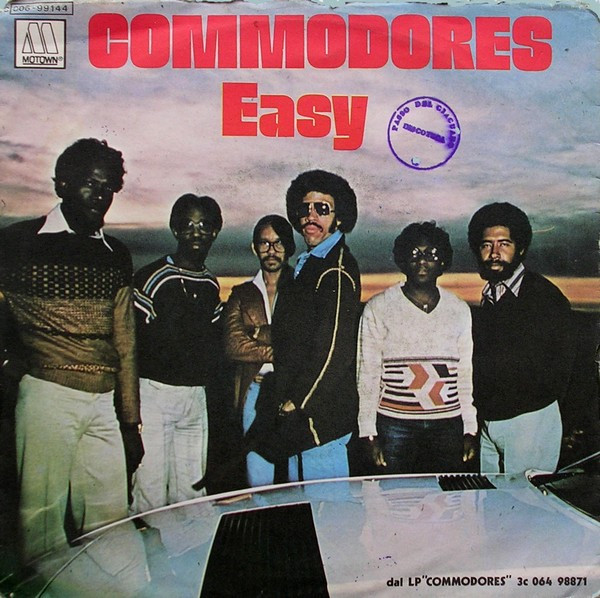
“Easy” – Commodores
#4 peak (August 27-September 3, 1977)
#33 year-end (22 weeks on chart)
With how much I now love R&B, I still have one big criticism regarding the genre. It’s generally regarded as the genre that kept it all mellow, the songs you play when you want to relax. But the worst R&B of the decade, and even some of the good songs, were actually among the most overdramatic songs of the time. You wouldn’t put them on when you’re trying to have a peaceful bedtime. But “Easy” is among the best examples of the genre, it that it actually keeps it all mellow. It’s just the most soothing thing 1977 brought to fruition, and demonstrated that Richie had more talent than is considered with the man, with its message of a breakup sometimes being necessary to be happier.
Let’s start with those lyrics. “Easy” is always used to describe someone in such a neutral state of mind, that nothing can bother him. And while that description may be true, a lot of people tend to ignore the subject matter. “Easy” is about a breakup. The narrator of the song is announcing to his girlfriend that he is leaving her, and can’t possibly continue to provide for her anymore.
Know it sounds funny
But I just can’t stand the pain
Girl, I’m leaving you tomorrow
Seems to me girl
You know I’ve done all I can
You see I begged, stole, and I borrowed
You see, the calmness in his life is that he won’t have to try so hard to please someone else anymore. He can just be on his own, and not worry about his responsibilities. It doesn’t even seem to be anything that his partner did, he mostly blames himself as evidenced by his “I begged, stole, and I borrowed” line. The song’s message comes across as way more devastating when the true meaning comes to light. There’s a reason this song was played in Baby Driver when K***n S****y had the titular character destroy his previous car to hide someone’s corpse. But then again, that’s what makes the song great: it’s taking a potentially sad event and turning it into something else entirely. And what sells this breakup song as a surprisingly uplifting and positive song is the music.
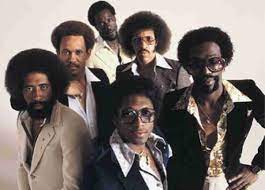
This song is just so wonderfully played. Listen to Richie’s main riff on the piano, with that G#-C7-Bm7-Bm7/E progression. It’s the 70’s R&B equivalent of just sitting by the sea, just contemplating about life. And then we get to the iconic “easy like Sunday morning” chorus. But what truly makes it stand out isn’t Richie. It’s that descending “Oh-oh-oh-oh” from Thomas McClary and Walter Orange, the backing vocalists. Every single time I hear their vocals, I struggle to resist the urge to hum along with them.
“Easy” could have just kept the mellow piano groove and the melodic backing vocals going for the entire rest of the song and it would still be very good, among the best songs the Commodores ever released. But this song just keeps piling on new surprises. At the bridge, when Richie’s vocals begin to elevate to a new level, we get a screaming upward slide from an unknown source. Wikipedia claims it’s caused by electronic feedback, though I think it’s guitarist Thomas McClary sliding his pick across the fretboard. Whatever it is, it somehow works, because it’s the equivalent of flying high across the sky, as promised on the Commodores’ self-titled album cover. Then we get to McClary’s distorted guitar solo. Last year (well, technically it was in 1973) it was John Oates’s brief solo on “She’s Gone,” but this year McClary takes the award because if there is a better simple guitar solo from 1977, I have not found it. And the reason for its success is because it adds another dimension to “Easy.” In an interview with Songfacts, McClary explained, “You have to match the intensity of those lyrics to a sound and a feel that musically portrays the same intensity and the same context of what you’re saying.” Which is what it does. For how soothing the song is, there’s still a breakup involved, a tragic catharsis. And McClary’s solo is the element that brings the pain to life. Even the key change at the end of the song, from A flat major to A major, doesn’t bother me. When you have so many positive musical elements to a song, why bother to criticize the one element that is questionable?
“Easy” is true to its name. Even with the conflict within the song, the message the lyrics provide, the group’s harmonies, and the effective piano groove truly make it “easy like Sunday morning.” And McClary’s guitar solo is just the element that ties everything together. Lionel Richie may have gone on to become one of the most hated music artists of the eighties, but for all the criticism he has received, he will always have this song.
UP NEXT: The best disco song of the year at #4.
SOURCES
“Easy by Commodores.” Songfacts 2022. Web. 7 August 2022 https://www.songfacts.com/facts/commodores/easy.
Richie, Lionel. “Easy.” Musicnotes.com 21 July 2008. Web. 7 August 2022 https://www.musicnotes.com/sheetmusic/mtd.asp?ppn=MN0066577.
Prato, Greg. “Commodores Founder Thomas McClary.” Songfacts 1 December 2017. Web. 7 August 2022 https://www.songfacts.com/blog/interviews/commodores-founder-thomas-mcclary.
IMAGE SOURCES
Single cover from Discogs
Photo of the Commodores from Not In Hall Of Fame
 Dr. Nelson Winston
Leave a comment