On the worst list, I made the potentially controversial statement that in 1977, R&B was beginning to undergo a decline it would never recover from. Let me elaborate.
I need to change up part of my theory regarding the decline of R&B. I stand by my initial claim that the genre was declining, in particular with Philly Soul. However, this is a new theory I am coming up with, so it will require some revision off and on. While it is true that R&B wasn’t as big in the last three years of the decade as it was in the rest of the decade, it was more because the sound was changing. The sound was actively being replaced by disco, and there was a whole other subgenre I forgot about when I wrote that diatribe a few weeks ago – funk.
Though again not as widespread as it was the previous year and especially when compared to the next two years, funk was becoming the face of R&B music. The two biggest R&B songs of the year, “Sir Duke” by Stevie Wonder and “Got To Give It Up” by Marvin Gaye, are funk first and foremost. Although “Got To Give It Up” is considered Marvin Gaye’s disco song, it’s like “Disco Lady”: they are merely talking about disco. But as good as that song is, the best funk song of the year is another song that claimed to be disco, but is merely talking about disco. But no matter, because almost no one in 1977 had a better groove than this:

“Dazz” – Brick
#3 peak (January 29-February 5, 1977)
#41 year-end, 21 weeks on chart (19 in 1977)
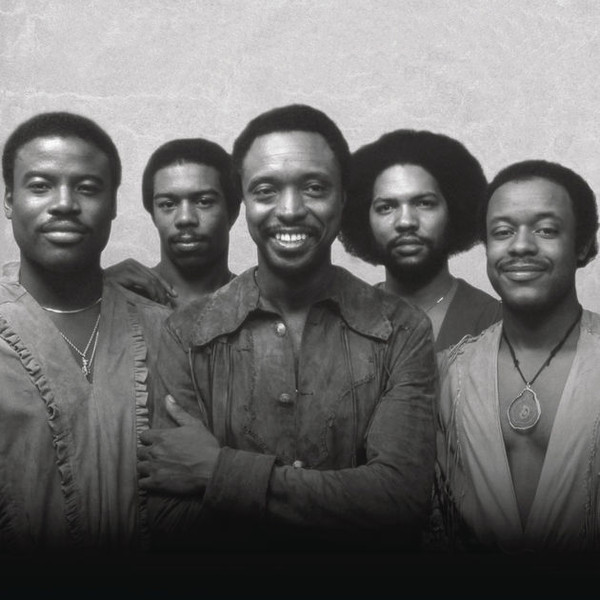
“Dazz” is intoxicating. Written and performed by an Atlanta band formed by the fusion of two groups of completely different genres: disco and jazz, they definitely made sure that their lone hit single counted.
Brick is so forgotten these days, their Wikipedia page only contains a small single paragraph about the band. Which is quite odd, because “Dazz” is instantly memorable because of one key element: Donald Nevins’s keyboard. Keyboards outside of the piano and organ have been so hit and miss in the world of popular music, but Nevins puts out one of the greatest keyboard riffs of all time with his opening riff, centered around the Em7th chord. Seriously. The “Dazz” keyboard riff is in the synth hall of fame next to “I Ran (So Far Away)” and the Soft Cell version of “Tainted Love.” The sound effects coming from his keyboard are just wicked, and they immediately grant the song a funk energy that fails to let up for the song’s 5 ½ minute length. Some people may think that instruments can talk sometimes, and those people are insane. Except for here. If there were ever an instrument that were casting a spell on the audience, it is the opening keyboard riff to “Dazz.” Every time I hear this song, I can just hear it going, “Alakazam! Alakazam!”
I’ll be honest, that single element is the main reason why “Dazz” made the list. But Brick add plenty of delightful elements along the way. As I reflected before beginning this entry, “Dazz” isn’t a disco song despite the implication that it’s “disco jazz.” The beat’s too slow, the hi-hat is at a minimum, and the bass follows a more varied pattern than the stricter eighth-sixteenth note pattern so many disco basslines used. With its hypnotic keyboard riff, descending guitar, and groovy bassline, “Dazz” is much more indebted to the school of funk. But that doesn’t mean you can’t dance to it. All the elements I just listed make it impossible to prevent yourself from moving your body to the rhythm. And Jimmy “Lord” Brown adds multiple solos on the track that add the promised “jazz” part of “Dazz.” The first saxophone solo just adds that intimate down-home feel that should be impossible to add to a funk song, but it delivers. The extended flute solo, meanwhile, adds the complete improvisation that makes jazz special. In a way, it’s kind of better that the song isn’t true disco: by combining the funk of the standard song with the jazz influence from the instrumental solos, Brick are creating a sound of their own.
On the surface, the lyrics don’t deserve much discussion, as there are a mere four common lines repeated for 5 ½ minutes. But they’re perfect for “Dazz” because the message is simple: even though this may be a new variation on a familiar sound for the time, the directive is still the same. To dance.
Everybody go on and dance if you want to
Music makes your body move, well all right
This line deserves a correction. Not as an insult, but as a point. Brick are not suggesting that you dance, they are ordering you to dance. Also, I just noticed something…
Funky dancing get up, get down, shake your booty
Oh my God… IT’S AN ASS SONG THAT’S ACTUALLY GOOD!!!!

(celebratory music plays)
But for real. “Dazz” is one of the best dance songs of the year. If that amazing keyboard riff doesn’t get you jumping up and down to the beat, there is something inherently wrong with you. And if you are somehow part of that group, the funk groove and the commanding lyrics will finish the job. “Jazz dazz, disco jazz” was an exciting new venture in 1977 that I can’t believe we didn’t get to explore more of. Well, it was fun while it lasted.
UP NEXT: The dance party continues… with a tragic ending at #7.
SOURCES
Chords taken from Morrisman Smith: https://www.youtube.com/watch?v=3jtn2Fepj20.
IMAGE SOURCES
Single cover from Genius
Photo of Brick from Discogs
GIF of crowd cheering from Curb Your Enthusiasm. GIF from Giphy.
 Dr. Nelson Winston
Leave a comment