The decline of a music artist.
It’s the period that no one wants to discuss when going through the history of their favorite artists, but at some point, it’s inevitable. The hits dry up. Musicians run out of ideas. Songs grow stale and fail to provide new directions for their audience. Every musician, at some point, has had a decline.
And I can’t think of many artists who had such a spectacular fall from grace as the honorary member of San Francisco society, Mr. Peter Frampton.
In 1976, Peter Frampton was on top of the world. After cutting his teeth as a guitarist in Humble Pie and releasing a number of solo albums in the 70s that slowly received more success with each passing release, Frampton released his double live album, Frampton Comes Alive!, in 1976. You may remember the album as mentioned in one of the few instances Peter Griffin on Family Guy actually said something that was true…
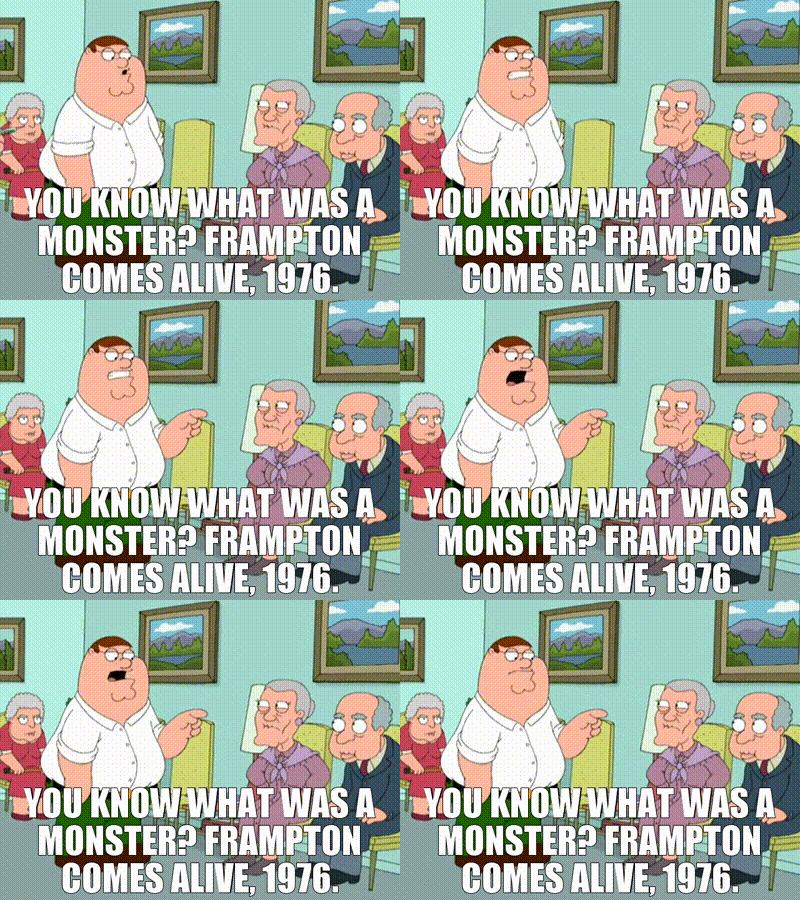
Everyone had that album. It went eight times platinum in the United States alone, with 11 million copies sold worldwide. It scored three hit singles: “Baby, I Love Your Way,” “Show Me The Way,” and the mind-melting 14 minute epic “Do You Feel Like We Do.” Even excluding those hits, there’s the opener “Something’s Happening,” the gentle yet effective “All I Want To Be (Is By Your Side),” and the booming “(I’ll Give You) Money.” It is truly one of the greatest live albums ever made.
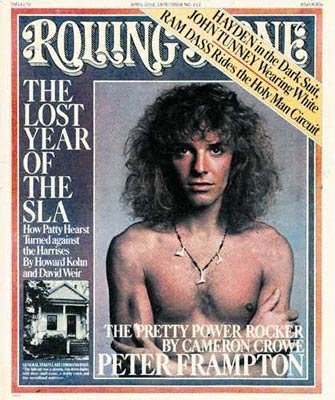
With the massive success of the record at a time when R&B and pop were dominating, there was no way Frampton was going to replicate the success. But his decline started sooner than anyone could have anticipated. That came later in 1976, when Frampton achieved the pinnacle that every rock artist strives for, at least since Ray Sawyer outlined it in his most emblematic song: he got his picture on the cover of the Rolling Stone. Problem was, his cover photo sucked. Instead of a more adept photo of him playing guitar, or heck, him playing with his infamous talk box, he instead appeared shirtless. I listen to Peter Frampton to rock out and play air guitar to his biggest songs, not to stare at his shirtless chest. Frampton himself has expressed regret over the cover photo, saying that it transformed his image from a guitar god to a teen idol. And indeed, I’d have to agree with him. Frampton’s Rolling Stone cover was the equivalent of Delilah chopping off Samson’s hair, because whether it was superstition or not, Frampton was just never good again.
And if you want to hear the musical equivalent of Samson after his hair has been cut off…
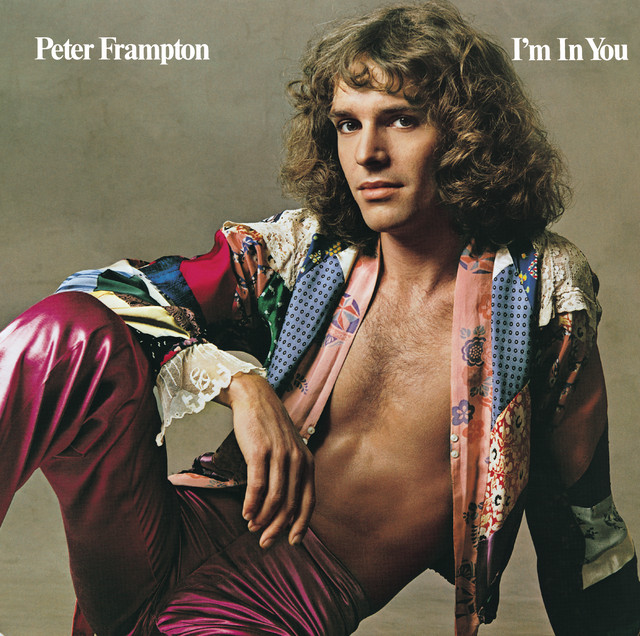
“I’m In You” – Peter Frampton
#2 peak (3 weeks, July 30-August 13, 1977)
#42 year-end, 20 weeks on chart
Oh boy, this song. There are a ton of pop song ballads that get tons of crap from this year, many of which I don’t have room for on this list because A) I like to be different, and B) most of them are just dull or pointless. But “I’m In You” fails even harder than those other songs. The reason is simple: songs like “Don’t Give Up On Us” or “Do You Wanna Make Love” just leave me indifferent or monotone. “I’m In You” makes me groan, from its music all the way down to its lyrical content.
Let’s start with the music, where we are immediately confronted with one big problem. When you think Peter Frampton, what instrument do you think of? The guitar. So I couldn’t think of a better idea… than to go for a piano ballad. That’s right. Frampton spends most of his time on this song doing his best Elton John impersonation and playing the piano while he sings. The song’s instrumentation, combined with the more straightforward lyrics (we’ll get to them), means that this is a pop song, not a rock song. In other words, this is a sell out song.
Since this is the first time I’ve dropped the dreaded “sell out” tag on a song, let’s go over the definition, because lots of music fans mess this up. A sell out has two parts. The first part of a sell out is that the music is made significantly more pop-oriented in order to appeal to a wider audience. But just because a song or artist is more pop-oriented does not mean they are a sell out. The best example I can think of is Sugar Ray, who after the black sheep success of their single “Fly,” cashed in their chips and went from a nu metal band to a pop rock act. There’s a reason for this. I’ve listened to metal Sugar Ray, and honestly, they were pretty crappy as a metal band. Their riffs were generic and Mark McGrath was horrible as a metal frontman, sounding less like a singer and more like the playground bully who tormented you when you were 7. “Fly” is without a doubt their best song, so it made perfect sense to make it the basis of their sound. To name a more recent example, Paramore completed their transition from emo to pop on their 2017 album After Laughter, and that album is among the best they’ve ever released. So why is “I’m In You” a sell out, while “Fly” and “Rose-Coloured Boy” are not? Well that’s because of the second part of the definition, the part that is frequently ignored. The song marks a significant drop in quality compared to their more familiar material. “I’m In You” is not only bad, it doesn’t even touch the lesser-known tracks of Frampton Comes Alive!.
Going back to the music, listen to the piano and accompanying keyboards. They sound horrible. When I hear the introduction and chorus to this song, I feel like I’m listening to a funeral, the keyboards are so cold and uninviting. Think about the great Peter Frampton songs and what they sound like. What is the similar quality about “Show Me The Way” and “Baby I Love Your Way”? They’re happy. They’re reminiscent of that pure time in your life the world seemed wild and free. “Show Me The Way” is that song you have a drunk sing-along with your friends with, and “Baby, I Love Your Way” is the song that sums up your romance. The fun that Peter Frampton had in his previous songs is gone, to be replaced by those depressing, plodding keyboard instruments. You know how everyone uses Nickelback as their definition of a song that’s ugly? They’re wrong. This is ugly. Hope you’re happy, people who complained that the talk box was the worst instrument ever. Instead of another extended talk box guitar solo, we got this. By the time there’s a prominent guitar part where Frampton gets a solo, it’s two minutes into its four minute run time. It tries to recall the glory and excitement of the Frampton Comes Alive! solos, but fails miserably in part because it’s so simple compared to his previous solos, and the twin lead at the end just fizzles out. There is another understated lead riff in the outro, but by then it’s too late.

And then we get to the lyrics. Oh God, the lyrics. This is 70’s AM radio cheese incarnate.
I’m in you, you’re in me
I’m in you, you’re in me
You gave me the love
The love that I never had
…………………..
This song is about sex.
I… I really don’t know any other way to put it to you all. “I’m In You” is clearly about sex. I mean, based on the lyrics to the song, either Peter Frampton and his girlfriend make love, or Peter Frampton and his girlfriend shrink themselves to microscopic size and take Fantastic Voyage-esque journeys into each other’s bodies. How uncreative can you get, where you use the absolute most basic metaphor for sex with “I’m in you?”
Wait a minute, I’m checking the meaning of the song right now, just to make sure I’m correct when delivering my criticisms. So apparently, based on the research I’ve done…
This is not about sex.
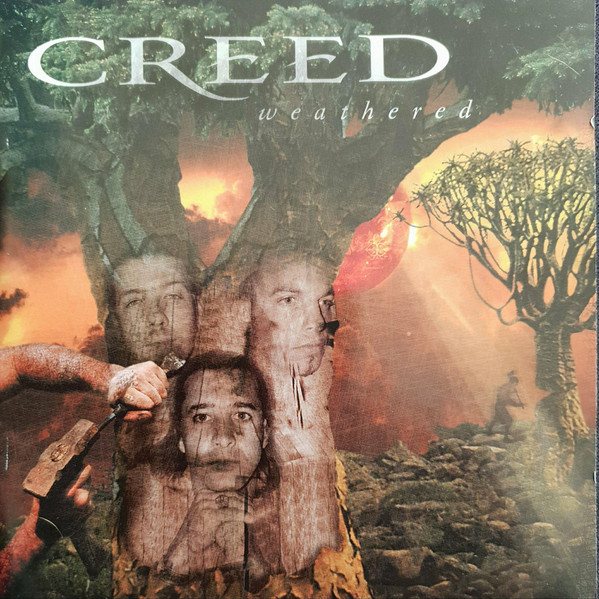
Scott, get out of here. I’ll take care of your songs when I do the late 90’s and early 00’s.
Anyway… based on what I’ve researched, there are two possible meanings for this song that I found. The first meaning, according to Songfacts, claims that the song, “I’m In You,” is actually a reference to “I Am The Walrus” by The Beatles, specifically the opening lyric, “I am he as you are he as we are me and we are all together…” I’m sorry. WHAT KIND OF STUPID EXCUSE IS THAT?!
“I’m In You” is a love song. “I Am The Walrus” was specifically written by John Lennon to troll with people who were studying Beatles songs to find deep hidden meanings. There is no way you can connect the two songs. There have been other seventies musicians, such as Barry White and Smokey Robinson, who have made excuses claiming their sex songs are not about sex, but at least their claims have some merit. Frampton does not have this luxury. The claim that this terrible love song is supposed to be cryptic and have hidden meaning makes about as much sense as Noel Gallagher trying to convince everyone that “Wonderwall” is about “an imaginary friend who’s gonna come and save you from yourself” to hide the fact that it’s about his estranged first wife.
The second meaning I got was that this song was about his recent separation from Mary Lovett, his first wife. Finally we have a meaning that makes sense within the context of the song that prevents me from thinking this song was about… you know. Now we can see that “love that I never had” lyric being about how he was grateful for the experience even though they were no longer together.
But even with that said, this song’s lyrics are still painful. Frampton switches between the past tense and the present tense when discussing Lovett, speaking in the present tense as if they’re still together in the first and second verses, before switching to the past tense in the third verse, which is how this song should have been formatted. And the fact remains that this song’s lyrics are basic and poorly thought out. I know it’s a common misconception that I came up with, to think this song is actually about sex, but listen to some of these lyrics. Don’t you think you would have come up with the same conclusion?
You and I don’t pretend
We make love
And that brings to mind the earlier “I’m in you” lyric. So you’re really saying is that you’ll never forget her. As in…

But it’s real hard to put it all behind me
It’s like a tattoo frozen in a memory
Yeah, I’m done with these lyrics. No way I look at the title makes it good. “I’m in you, you’re in me” is the “Superman that ho” of 1977: a lyric that may not be sexual in context, but whose presence further reveals the song’s narrative flaws.
Well, this song may have reached the penultimate slot on the Billboard Hot 100 (thank you, Andy Gibb), but I still believe “I’m In You” was another wrench thrown into Frampton’s career, because it just shows how truly bad pop rock can be with its ugly instrumentation and its inane lyrics. And the nightmares for Pete just kept coming. The following year, he starred alongside The Bee Gees in the godawful Sgt. Pepper’s Lonely Hearts Club Band movie, and in 1980, he lost his beloved three-humbucker pickup Gibson Les Paul (the guitar he’s playing on the iconic Frampton Comes Alive! cover) in a plane crash. The message has been made clear: Frampton never recovered from this song, or that Rolling Stone cover.
One more note before we finally move on: I’ve seen Peter Frampton live, my parents dragged us to see him the summer after I graduated from Binghamton University at CMAC in Canandaigua. His setlist consisted of a considerable number of songs from Frampton Comes Alive!, early Humble Pie songs, his bizarre cover of “Signed, Sealed, Delivered (I’m Yours)” (God, this man had an awful year in 1977), a cover of Soundgarden’s “Black Hole Sun”… but not this song. And after hearing it years later, I don’t blame him. I really don’t.
UP NEXT: The worst pop ballad of the year is at #4. Is it by who you think it is? Click the link to find out!
SOURCES
“No Fade In Frampton’s Future.” Cincinnati Enquirer 4 February 2001. Print. 21 June 2022. Information gathered from Wikipedia.
“I’m In You by Peter Frampton.” Songfacts 2022. Web. 21 June 2022 https://www.songfacts.com/facts/peter-frampton/im-in-you.
Polcaro, Rafael. “Great Forgotten Songs #34 – Peter Frampton’s ‘I’m In You.’” Rock And Roll Garage 29 January 2018. Web. 21 June 2022 http://rockandrollgarage.com/great-forgotten-songs-34-peter-frampton-im/.
McKinley, James C. Jr. “Peter Frampton Reunited With ‘Best Guitar’ After 31 Years.” New York Times 3 January 2012. Web. 21 June 2022 https://web.archive.org/web/20150204143134/http://artsbeat.blogs.nytimes.com/2012/01/03/peter-frampton-reunited-with-best-guitar-after-31-years/?_r=0.
IMAGE SOURCES
Album cover from Spotify
GIF of Peter Griffin referencing Frampton Comes Alive! taken from GetYarn. Clip initially from the Family Guy episode “Stewie Loves Lois,” aired 10 September 2006.
Peter Frampton Rolling Stone cover from 22 April 1976, image from Amazon.
Image of a funeral from Wonderwall
Creed’s Weathered and Vanilla Ice’s Hard To Swallow album covers from Discogs
 Dr. Nelson Winston
Leave a comment