As I mentioned at the beginning of the worst list, this was the first Mainstream Rock chart I went through in detail. After going through the entire top 50, I can now understand why so many people hate current rock music these days… a lot of it sounds the same. Can you tell me the difference between “Unforgettable” by Godsmack, “Right Now” by Fire From The Gods, and “Resentment” by A Day To Remember, other than that they have different vocalists? I couldn’t either. It is such a huge problem, and rock will need to diversify in order to engage people again, just like it did in the 90s when Madchester, Grunge, Shoegazing, Post-Grunge, Britpop, Ska, Trip Hop, and Nu Metal all competed for attention.
It’s gotten to the point now where when a new sound hits Mainstream Rock radio, it comes across as a jolt to the listener. How could this artist that sounds completely different share space with Five Finger Death Punch, Seether, and Shinedown? And of all the music that infiltrated the airwaves in every genre in 2020, I can’t think of a bigger oddball on a single chart… than a Mongolian band, reciting old Mongolian war cries in their native language, without the use of a single guitar (on their original recordings, at least), that somehow managed not one but two hits on the Mainstream Rock chart this year.
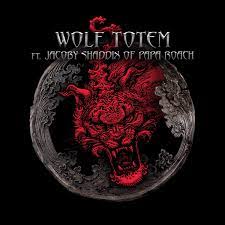
“Wolf Totem” – The Hu (with or without Jacoby Shaddix)
Mainstream
#5 peak, #14 year-end
Everyone, meet The Hu. Nothing I mentioned in my introduction to this song was an exaggeration: They’re from Ulaanbattar, Mongolia, and their instrumentation consists of two morin khuurs (horsehead fiddles), a Jew’s harp (or Tumur Khuur), a tsuur (flute), and a tovshuur (lute). Okay, so they do bring in several touring members to provide more conventional instrumentation like guitar and drums, but the point is made. There has never been a band like this attracting such attention in America. How they were able to find this much success in a format that has become increasingly prickly regarding new talent is nothing short of a miracle.
Their first single, “Yuve Yuve Yu” (Mongolian for “How Strange, How Strange”), also made the charts this year thanks to a remix involving Danny Case from From Ashes To New, peaking higher than “Wolf Totem” at #4 though settling for a lower spot on the year-end list. Unfortunately, that song didn’t work as well due to an annoying hook with the “Yuve Yuve Yu” recitation. Too bad, because the unique sound is there. Fortunately, “Wolf Totem” came along and corrected that flaw.

To create a truly unique sound in the rock world, which has undergone so many mutated forms in its 65 years of existence, is a huge accomplishment. But not only is The Hu’s sound different, it more than qualifies as rock. “Wolf Totem” is dark, menacing, and scary, proof that in a world where bands and artists constantly mistake programming and loud percussion as rock music, you don’t need a guitar to rock out. With their fiddles and lutes, The Hu create an atmosphere that sounds like appropriate music for a fight to the death between a pair of tigers. The low end from the instruments more than makes up for the absence of bass on most of the song, and the high-pitched fiddle implementations at the end of verses and each chorus build tension in a way guitars can’t – with a wailing, meandering grace signaling that more danger is coming. The chord progression is very simple – it’s just a three chord progression that repeats for the entire song as E flat-G flat-A flat-E flat-A flat-G flat, but who cares this time out? Aside from it being done it a new way, that rhythm from the instrumentation is just so brutal.
Then there’s the singing. In The Hu, three of the four members engage in lead vocals, with their lute player adding backing vocals. They engage in a special type of singing called “throat singing,” a form of singing intended to mimic the sounds of nature. Well, it more sounds like the arrival of war to me. With their deep and unsettlijng voices, The Hu create an atmosphere that represents the preparation of war. Let’s be honest, everything about this song is about preparing to do battle, from the instrumentation, to the vocals, to the lyrics:
(note: this is a rough English translation of the lyrics. The lyrics are sung in Mongolian)
If lions come, we’ll fight until the end
If tigers come, we’ll fight and battle
If elephants come, we’ll fight in rage
If humans come, we’ll fight and obliterate
I don’t have much to say about the actual single remix of the song that made the year-end chart. It’s obviously made more generic with the inclusions of traditional rock instruments, but what is included work well: Jacoby Shaddix of Papa Roach’s new lyrics fit seamlessly with the themes of The Hu’s existing lyrics, and the guitar complements, rather than overwhelms, the Mongolian instrumentation. For casual hard rock listeners this may be the way to get introduced to the song, but for all others I’d recommend hearing the original version first, in order to get the full experience of all the new sounds The Hu are pushing.

With their unlikely success, it appears that The Hu will still be around in the years to come. And just to demonstrate to the rock community that they are, in fact, a rock band despite their unusual instrumentation, they recently contributed a Mongolian-sung cover of… “Sad But True” by Metallica.
I already love this band.
SOURCES
Levin, Theodore. When Rivers And Mountains Sing. Bloomington, IN: Indiana University Press, 2006. Web. 21 January 2021.
IMAGE SOURCES
Single cover from IMDB
Photo of band from GQ
Image from music video from YouTube
 Dr. Nelson Winston
Leave a comment